What Does A DOT Physical Blood Pressure Check Involve
December 4, 2025
Why the DOT Blood Pressure Check Matters for Drivers
Blood pressure plays a starring role in the DOT physical. For commercial drivers, a sudden fainting spell, stroke, or heart event on the road can risk lives and livelihoods. The Federal Motor Carrier Safety Administration (FMCSA) uses blood pressure as a straightforward, powerful marker of cardiovascular risk.
Clinicians check it because high numbers often signal treatable problems. Passing the blood pressure portion lets a driver keep working. Failing it triggers evaluation and treatment, which protects the driver and everyone else on the highway.

Who Performs the DOT Physical and Where it Happens
A certified medical examiner listed on the National Registry performs the DOT physical. You typically find these examiners at occupational clinics, urgent care centers, truck stops with medical services, and specialized DOT clinics. These examiners operate under FMCSA rules and use protocols that create consistent, reproducible blood pressure measurements. Expect a professional, focused check rather than a casual reading.
DOT Physicals for Less: How We Approach Blood Pressure Screening
At DOT Physicals for Less, we aim to make the blood pressure portion quick, accurate, and respectful. We use up-to-date cuffs, follow the FMCSA guide, and give friendly, plain-language explanations to drivers. If a reading looks high, we repeat it properly and walk you through next steps instead of alarming you.
Our team documents everything clearly on the Medical Examiner’s Certificate and offers advice on treatment or follow-up testing. We treat drivers like partners, not paperwork.
The Official Standards that Examiners Follow (FMCSA Basics)
Medical examiners follow FMCSA standards and use the guide to determine fitness to drive. The FMCSA does not ban every person with high blood pressure. Instead, examiners check whether blood pressure puts the driver at immediate risk of losing control or becoming incapacitated.
The rules set thresholds and recommend documentation, monitoring, and sometimes temporary certification while a driver works on control. Examiners must record values and any medications the driver takes.
Step-by-step: What Happens During the Blood Pressure Portion
Let’s walk through the exact flow. Imagine you’re sitting in the exam room. The examiner follows a sequence that looks simple but relies on small details that affect accuracy.
Greeting and Medical History Check
The examiner will ask about your medical history: previous hypertension, heart disease, stroke history, medications, and recent symptoms like dizziness or chest pain. Answer clearly and honestly.
The examiner needs to know if you take blood pressure medication, how long you’ve taken it, and if you follow a treatment plan. Those facts influence whether they rely on a single reading or request tighter monitoring.
Initial Resting Measurement: How Examiners Take It
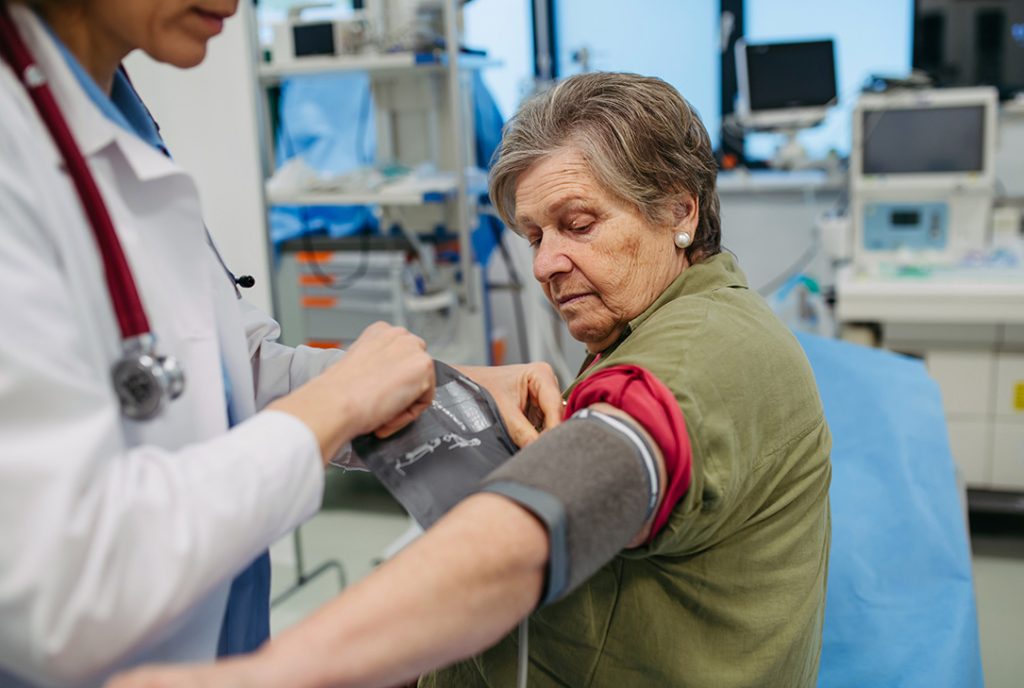
Before taking your blood pressure, the examiner will ask you to sit quietly for at least five minutes. They may have you relax with legs uncrossed and back supported. Then they’ll select an appropriate cuff size and place it on your bare upper arm, at heart level. They will ensure your arm rests supported, palm facing upward.
The examiner inflates the cuff and listens or uses an automated device to read systolic (top number) and diastolic (bottom number) pressure.
Cuff Size, Arm Position, and Environment — Small Details That Matter
A wrong cuff size or a tensed arm can throw numbers off. If the cuff sits over clothing or sits too loose, the reading becomes unreliable.
Examiners choose a cuff size that matches your arm circumference. They keep the room quiet, avoid measuring immediately after heavy activity or a big caffeine hit, and confirm your arm aligns with your heart. These details shave a few millimeters off the reading and improve fairness.
Re-check Protocols When the First Reading is High
If the first reading exceeds acceptable thresholds, the examiner will repeat the measurement. They may ask you to sit quietly another five minutes or take readings in both arms to confirm. Many examiners take two or three readings spaced a minute apart and use the average or the most consistent value. This repeat protocol prevents a one-off spike—like stress or movement—from causing an unfair fail.
What Counts as a Passing Blood Pressure Reading for Commercial Drivers
The widely referenced threshold for routine DOT clearance sits near 140/90 mm Hg. Clinicians use clinical judgment, but the common practice: if your systolic is under 140 and your diastolic under 90, examiners usually issue the certificate for up to two years.
A reading in the mildly elevated range may lead to temporary certification with guidance. Higher readings require prompt follow-up, treatment proof, or shorter certification intervals.
Normal, Prehypertensive, Stage 1 and Stage 2 Explained in Plain Terms
Think of blood pressure as a spectrum:
- Normal: under 120 systolic and under 80 diastolic. This is ideal.
- Elevated / Prehypertensive: systolic 120–129 with diastolic under 80. Drivers in this range need lifestyle attention.
- Stage 1 Hypertension: systolic 130–139 or diastolic 80–89. This range may call for monitoring or treatment.
- Stage 2 Hypertension: systolic 140+ or diastolic 90+. Clinicians take this seriously and may require treatment and documentation to grant or extend certification.
These categories help examiners decide whether a driver can work right away or needs evaluation.
When and How Medication Affects the DOT Exam Result
If you take antihypertensive medication and your measured blood pressure falls into acceptable ranges, examiners typically document your medication and may grant certification for up to two years. They often record the medication name, dose, and how long you’ve taken it.
If your blood pressure remains high despite medication, the examiner may ask for a letter from your treating clinician showing an active management plan and possibly a plan for closer monitoring.
Common Antihypertensive Drugs and What Examiners Note
Examiners commonly see ACE inhibitors, ARBs, calcium channel blockers, beta blockers, and diuretics. Each drug class has different side effects and considerations.
For example, beta blockers can cause fatigue or decreased exercise tolerance; examiners will ask about side effects that might impair driving. The examiner also records if you started a new medication recently because blood pressure can shift during the first weeks of treatment.
Follow-up Testing and Certificates: Temporary Certifications and Monitoring
If the examiner sees high readings that they believe will respond to treatment, they may issue a temporary certificate, often for three months. This short certificate gives the driver time to start therapy and return with blood pressure logs or a treating-provider letter.
Examiners accept home blood pressure logs when patients use validated cuffs and keep records. If treatment works and repeat readings fall below threshold, the examiner will extend the certification for the standard interval.
Real-world Tips to Prepare for the Blood Pressure Check (Day-of Strategies)
You can influence that reading with simple, immediate actions. Try these practical tips:
- Avoid heavy exercise within 30 minutes before the exam.
- Skip nicotine and caffeine for at least 30 minutes. Those stimulants spike blood pressure temporarily.
- Empty your bladder before the reading, because a full bladder can slightly raise numbers.
- Wear a short-sleeve shirt or loose sleeve so the examiner can place the cuff on your bare arm.
- Sit quietly for five minutes before the measurement. Don’t scroll your phone during that time—relax.
Those steps reduce measurement artifacts and give a fair reading.
Lifestyle Quick Wins that Reduce Readings in Hours or Weeks
If you have time before the exam—days to weeks—you can lower numbers further:
- Cut back on sodium. Many drivers see meaningful drops within two weeks.
- Walk briskly 30 minutes most days. Regular activity helps.
- Limit alcohol intake. Two drinks raise blood pressure; one or fewer supports control.
- Lose a few pounds if you’re overweight. Even small weight loss yields measurable benefits.
- Improve sleep quality. Poor sleep links to higher blood pressure.
These actions improve long-term health and your DOT fitness record.
What Happens if you Fail a DOT Blood Pressure Check — Next Steps
Failing the blood pressure check does not immediately end your career. Examiners typically follow a path that focuses on safety and remediation:
- The examiner explains the reading and documents it.
- They may issue a short-term certificate to allow time for treatment or a referral.
- The examiner will instruct you to see a primary doctor or cardiologist for evaluation and a treatment plan.
- After treatment and documented improvement, you return for re-evaluation. Once you meet thresholds, the examiner restores full certification.
This process prioritizes returning drivers to work safely rather than punishing them.
Medical Evaluation, Treatment Plans, and Returning to the Examiner
Your treating clinician will likely recommend medication, lifestyle changes, or additional testing like labs or an ECG. When you return to the DOT examiner, bring documentation: medication list, blood pressure logs, and clinician notes showing improvement. A clear treatment plan with evidence of lower blood pressure often convinces the examiner to grant certification.
Employer and Legal Implications of Failing the Blood Pressure Portion
Employers may have policies tied to DOT certification—no certificate, no driving. Your employer must follow federal laws and safety rules and often needs proof of clearance to allow you behind the wheel again.
Legally, the examiner reports certification status but does not bar you permanently. The primary concern remains public safety; the system aims to rehabilitate drivers to safe operating status.
Frequently Made Mistakes Drivers Make During the BP Check
Drivers sometimes sabotage a fair result without meaning to. Here are common missteps:
- Drinking a large coffee right before the exam.
- Wearing long sleeves and not allowing the cuff on bare skin.
- Tensing the arm or clenching a fist during the reading.
- Talking while the examiner measures.
- Not disclosing medication or recent changes.
Avoid these mistakes and you increase the chance of an accurate, favorable reading.
How Examiners Document Blood Pressure on the Medical Examiner’s Certificate
The examiner records the measured systolic and diastolic values, any medications, and whether they grant a standard or shorter-term certification. If examiners grant a conditional certificate, they write monitoring instructions and required follow-up. That documentation travels with your file and can inform employers and treating clinicians.
The Role of Home Blood Pressure Monitoring in DOT Exams
Examiners sometimes accept home readings but expect them to come from validated devices and consistent technique. A week-long log showing stable, controlled readings strengthens a case if clinic measurements show a borderline spike. Examiners look for consistency: daily logs at the same times using the same cuff and arm provide a trustworthy pattern.
Special Scenarios: White-Coat Hypertension and Masked Hypertension
Some drivers show high readings only in clinical settings—white-coat hypertension. Conversely, masked hypertension appears normal in clinics but high at home. Examiners handle both cases with context.
For suspected white-coat effect, they may request home logs or ambulatory readings. For masked hypertension, they urge more testing and treatment since the clinic reading underestimates risk.
Blood Pressure and Other Parts of the DOT Physical
Blood pressure links to many other exam parts: vision, cardiovascular exam, neurological history, and medication side effects. The examiner checks your heart and lungs and asks about chest pain, dizziness, and fainting. If medications for blood pressure cause drowsiness or orthostatic symptoms, the examiner discusses driving safety and may request further evaluation.
Practical Checklist Before a DOT Physical (Quick, Printable)
Use this short checklist the day you visit the examiner:
- Skip caffeine and nicotine for 30–60 minutes.
- Rest quietly for five minutes before measurement.
- Wear clothing that allows cuff placement on bare upper arm.
- Bring a current medication list with doses and timing.
- Bring home blood pressure logs if you have them.
- Note any recent changes: new meds, illness, or unusual symptoms.
This list packs high impact into a few steps.
DOT Physicals for Less Serving the Larchmont Community and Beyond in Houston
DOT Physicals for Less is dedicated to serving the diverse needs of the local community of Houston, including individuals residing in neighborhoods like Larchmont. With its convenient location near landmarks such as the Houston City College – West Loop Campus and major intersections like Southwest Fwy. & Westpark Dr. (coordinates: 29.725696409316072, -95.4782759514727), we offer DOT certified medical examiner Houston services.
Get DOT Certified Medical Examiner Services at Larchmont Now
Navigate from Larchmont to DOT Physicals for Less Now
Your Roadmap Moving Forward
The blood pressure check during a DOT physical stands as a clear safety checkpoint. It measures a modifiable risk and opens a path to intervention when it looks high.
Most drivers can meet standards with small but focused changes, consistent medications, and clear documentation. If you treat the DOT physical as a partnership with the examiner—honest, prepared, and proactive—you’ll find the process straightforward and fair.
FAQ
1. Can I drink coffee before my DOT physical?
Try to avoid coffee for at least 30 minutes prior to the blood pressure measurement. Caffeine can transiently raise your reading and risk an unnecessarily high result.
2. Do I need to bring proof of prescription medications?
Bring your medication list with names, doses, and how long you’ve taken them. A printed list or pill bottles helps examiners document therapy accurately.
3. How long does an elevated reading delay my certification?
If the examiner sees a high reading, they may grant a short-term certificate—often three months—or ask for treatment documentation before extending certification.
4. Will losing weight quickly help before the exam?
Rapid weight loss rarely gives fast, reliable results. Small weight loss over weeks to months helps. Focus on immediate steps like skipping caffeine and resting before the exam for day-of improvements.
5. Can I use a home BP monitor to prove control?
Yes. Examiners accept home logs when you use a validated cuff and record consistent, correctly obtained readings. Bring a printed log showing times and values.