What Is the DOT Drug Testing Process
February 28, 2026
When talking about workplace safety in transportation and safety‑sensitive industries, the DOT drug testing process is an important compliance requirement. Regulated by federal guidelines, this testing program helps promote safe operations and responsible employee behavior.
Whether you are an employer, a commercial driver, or someone preparing for a DOT-regulated role, understanding how the process works can help you avoid delays and stay compliant. This guide explains each step in clear, practical terms.

Understanding DOT Drug Testing
DOT drug testing is a federally mandated program for employees in safety‑sensitive positions. It is governed by the Department of Transportation and enforced through specific agencies such as the Federal Motor Carrier Safety Administration.
The program is designed to:
- Promote public safety
- Reduce accidents linked to substance misuse
- Ensure transportation workers are fit for duty
- Maintain consistent national testing standards
DOT testing is not the same as standard workplace drug testing. It must follow strict federal procedures, including how specimens are collected, handled, and reviewed.
Who Must Take DOT Drug Tests
DOT drug testing applies to workers in safety‑sensitive roles across several industries. The most common group includes commercial motor vehicle drivers regulated by FMCSA.
Common covered employees
- CDL truck drivers
- Bus drivers
- Pipeline workers
- Aviation employees
- Railroad workers
- Transit operators
Employers must know which roles are classified as safety‑sensitive under DOT rules. Testing someone outside these roles does not qualify as DOT testing.
Types of DOT Drug Tests
The DOT program includes several testing situations. Each serves a different purpose in maintaining workplace safety.
Pre‑Employment Testing
Before performing safety‑sensitive duties, applicants must pass a DOT drug test. Employers cannot allow a driver to begin regulated work until a negative result is confirmed.
Key points:
- Required before first safety‑sensitive task
- Must be urine testing only
- Results must be verified by a Medical Review Officer
Random Testing
Random testing helps discourage drug use because employees do not know when they may be selected.
Employers must:
- Use a scientifically valid random selection method
- Test throughout the calendar year
- Meet minimum annual testing rates set by the DOT
Selections must be truly random and spread reasonably across all quarters.
Post‑Accident Testing
After certain accidents, DOT rules require drug and alcohol testing. This helps determine whether substance use may have been a factor.
Testing is generally required when:
- There is a fatality
- A driver receives a citation with injury
- A vehicle must be towed due to damage
Timing matters. Drug tests should occur within 32 hours when possible.
Reasonable Suspicion Testing
Supervisors trained under DOT standards may order testing when they observe specific signs of drug use.
Examples of qualifying observations:
- Slurred speech
- Unsteady movement
- Unusual behavior
- Physical signs of impairment
Documentation of observations is required before sending an employee for testing.
Return‑to‑Duty and Follow‑Up Testing
Employees who previously violated DOT drug rules must complete the return‑to‑duty process before resuming safety‑sensitive work.
This includes:
- Evaluation by a Substance Abuse Professional (SAP)
- Negative return‑to‑duty test
- Unannounced follow‑up testing plan
Follow‑up testing may continue for up to five years, depending on the SAP’s recommendations.
Step‑by‑Step DOT Drug Testing Process
Understanding the actual testing workflow helps remove confusion. While procedures are detailed, the overall process follows a clear structure.
Step 1: Employee Notification
The employee is informed that they have been selected for testing. For random tests, this typically happens immediately before the test to reduce the chance of tampering.
Employees must proceed to the collection site without delay.
Step 2: Arrival at the Collection Site
At the testing location, the collector verifies the employee’s identity using government-issued photo identification.
The collector also explains:
- The testing procedure
- Employee rights and responsibilities
- Required paperwork
DOT testing uses the Federal Custody and Control Form (CCF), which tracks the specimen from collection to lab.
Step 3: Specimen Collection
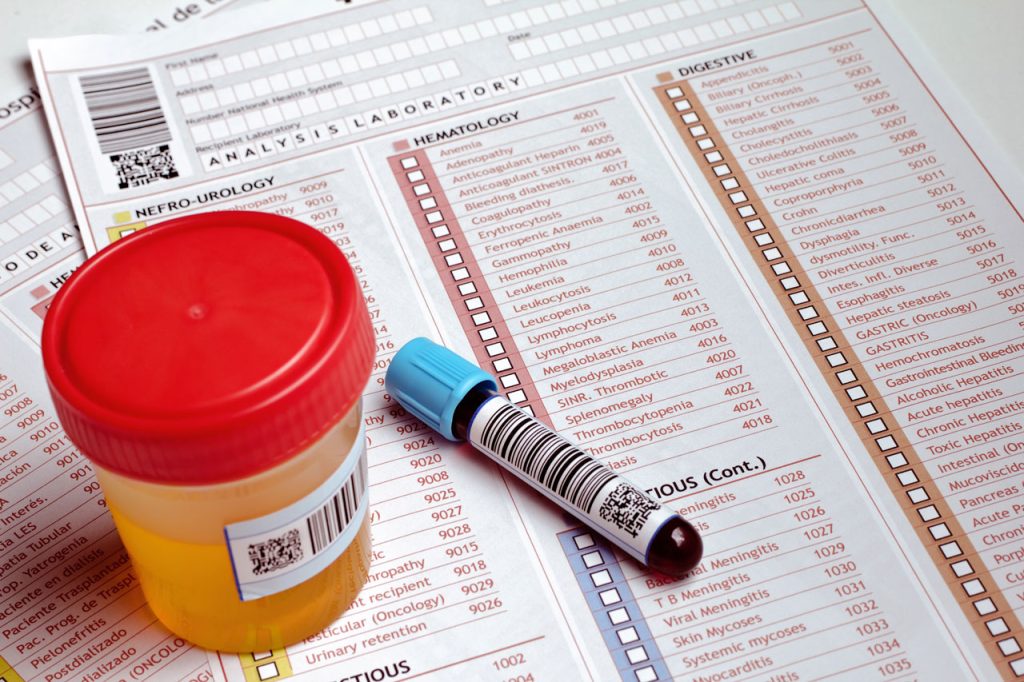
DOT drug testing uses urine specimens only. The collection must follow procedures established by the Substance Abuse and Mental Health Services Administration.
Key collection requirements:
- Privacy protections during collection
- Temperature check within four minutes
- Minimum volume requirements
- Split specimen process
The split specimen allows retesting if results are disputed.
Step 4: Laboratory Testing
The specimen is sent to a certified laboratory for analysis. The lab performs:
- Initial screening test
- Confirmation test (if screening is positive)
DOT tests typically screen for five drug classes:
- Marijuana metabolites
- Cocaine metabolites
- Amphetamines
- Opioids
- Phencyclidine (PCP)
Labs must meet strict federal certification standards.
Step 5: Medical Review Officer Evaluation
Results do not go directly to the employer. Instead, a Medical Review Officer (MRO) reviews all laboratory findings.
The MRO will:
- Contact the employee if results are non‑negative
- Review legitimate medical explanations
- Verify prescriptions when applicable
- Issue the final verified result
This step helps ensure fairness and accuracy.
Step 6: Employer Notification
After MRO review, the employer receives the verified result.
Possible outcomes include:
- Negative
- Positive
- Refusal to test
- Cancelled test
Employers must keep these records confidential and stored according to DOT retention rules.
What Happens After a Positive DOT Drug Test
A positive DOT result does not automatically mean termination, but it does remove the employee from safety‑sensitive duties immediately.
The employee must complete the return‑to‑duty process, which includes:
- SAP evaluation
- Education or treatment program
- Negative return‑to‑duty test
- Follow‑up testing plan
Employers must also report violations to the Drug and Alcohol Clearinghouse when required under FMCSA rules.
Common Reasons for Test Refusal
Refusals are treated the same as positive results under DOT regulations.
Examples of refusal include:
- Failing to appear for testing
- Leaving the collection site early
- Not providing sufficient urine
- Tampering with the specimen
- Declining to cooperate with procedures
Employees should understand that even unintentional noncompliance can be recorded as a refusal.
Employer Responsibilities in DOT Drug Testing
Employers carry significant responsibility in maintaining a compliant testing program.
Key employer duties
- Maintain a written DOT drug policy
- Use certified laboratories and collectors
- Train supervisors for reasonable suspicion
- Keep accurate records
- Follow required testing rates
- Report to the Clearinghouse when required
Failure to follow these rules can result in audits, fines, or operational disruptions.
How to Prepare for a DOT Drug Test
Preparation is straightforward, but awareness helps avoid delays.
Practical tips:
- Bring valid photo identification
- Follow instructions at the collection site
- Disclose legitimate prescriptions to the MRO
- Avoid delaying the test after notification
- Stay hydrated but do not overconsume fluids
Employees should never attempt to change or dilute specimens, as labs are trained to detect irregularities.
Why DOT Compliance Matters
DOT drug testing is designed to promote safety across transportation systems. When properly implemented, it supports safer roads, workplaces, and public environments.
For employers, compliance helps:
- Reduce liability risks
- Maintain operating authority
- Support a culture of accountability
- Pass federal audits more smoothly
For employees, understanding the process reduces anxiety and supports career stability in regulated roles.
Professional Testing Support
If your organization needs reliable assistance with DOT compliance, working with an experienced provider can simplify the process. DOT Physicals for Less offers professional support for DOT-related testing and physical exams, helping employers and drivers stay aligned with federal requirements.
Affordable and Reliable DOT Drug Tests Near Gulfton Area
When it comes to DOT drug testing, you want accuracy, speed, and affordability all without compromising federal compliance. That’s where DOT Physicals for Less comes in. Located conveniently near Gulfton, we specialize in providing professional DOT drug tests for drivers and employees in safety-sensitive roles.
Why Choose DOT Physicals for Less?
1. Quick and Convenient Service
We know your time is valuable. At DOT Physicals for Less, our testing process is streamlined to get you in, tested, and on your way. No long waits, no unnecessary delays, just fast, reliable service.
2. Fully DOT-Compliant Testing
All our drug tests follow the federal guidelines set by the Department of Transportation (DOT). From proper specimen collection to certified laboratory analysis, we ensure your results meet regulatory standards. You can trust that your test will be handled professionally from start to finish.
3. Affordable Rates Without Sacrificing Quality
We offer competitive pricing for DOT drug tests in Houston’s Gulfton neighborhood, making it easier for drivers and employers to stay compliant without breaking the budget. Affordable does not mean rushed, we maintain high standards in every test we perform.
4. Experienced and Friendly Staff
Our team is trained in DOT procedures and ready to assist you through the testing process. We make sure every patient understands what to expect, feels comfortable, and leaves confident that their test is accurate and secure.
5. Convenient Location in Gulfton
Our office is easily accessible from the Gulfton area and surrounding neighborhoods, saving you time and travel stress. Whether you’re a local driver or an employer scheduling multiple tests, we make compliance simple and convenient.
How It Works
- Schedule Your Test: Call or book online for a DOT drug test at our Gulfton location.
- Visit Our Office: Arrive with a valid photo ID, and our staff will guide you through the procedure.
- Collection & Lab Processing: Your specimen is handled according to DOT standards and sent to a certified lab.
- Results Delivered: Verified results are provided promptly, ensuring you stay compliant with DOT requirements.
Stay Compliant, Stay Safe
DOT regulations exist to keep our roads and workplaces safe. By choosing DOT Physicals for Less, you’re selecting a partner who values accuracy, speed, and affordability while making the testing experience hassle-free.
Whether you’re a commercial driver, employer, or safety-sensitive employee in Gulfton, Houston, we make DOT drug testing simple, reliable, and budget-friendly.
Call us today or schedule online to get your DOT drug test completed quickly and professionally!
DOT Physicals for Less Serving the Gulfton Community and Beyond in Houston
DOT Physicals for Less is dedicated to serving the diverse needs of the local community of Houston, including individuals residing in neighborhoods like Gulfton. With its convenient location near landmarks such as the Benavidez Elementary School and major intersections like Gulfton St. and Westward St. (coordinates: 29.716704099999987, -95.4938099), we offer DOT drug test Houston services.
Get DOT Drug Test At Gulfton Now
Navigate from Gulfton to DOT Physicals for Less Now
Final Thoughts
The DOT drug testing process is designed to promote safety across transportation industries. By following standardized procedures from specimen collection to MRO review the program helps confirm that safety-sensitive employees meet federal requirements.
For drivers, understanding when tests occur and what to expect removes uncertainty. For employers, consistent compliance protects both operations and public safety.
Staying informed, following procedures carefully, and working with qualified providers will help ensure the DOT drug testing process runs smoothly from start to finish.
FAQs
1. What is the DOT drug testing process and who must take it?
The DOT drug testing process is a federally regulated program for employees in safety-sensitive roles, such as commercial drivers, transit operators, and aviation personnel. It ensures workplace safety by screening for substance use according to strict federal standards.
2. What types of DOT drug tests are required?
DOT drug testing includes pre-employment, random, post-accident, reasonable suspicion, return-to-duty, and follow-up tests. Each serves a specific purpose to maintain safety and compliance in regulated industries.
3. How is a DOT drug test performed?
DOT tests use urine specimens collected under federal procedures. The process includes verification of identity, collection under controlled conditions, lab analysis, and review by a Medical Review Officer (MRO) to confirm results.
4. What happens if an employee tests positive or refuses a DOT drug test?
A positive test or refusal to test removes the employee from safety-sensitive duties immediately. The individual must complete the return-to-duty process, which involves evaluation by a Substance Abuse Professional (SAP), treatment or education, a negative return-to-duty test, and follow-up testing.
5. Why is compliance with the DOT drug testing process important for employers and employees?
Compliance ensures safety, reduces liability, and avoids regulatory penalties. For employees, it protects their career by ensuring fair and standardized testing. For employers, following DOT rules supports operational integrity and helps pass federal audits.